Galvanizing is the process of coating steel and iron (metal) products to improve their corrosion resistance.
This protection method is based on the principle that zinc, which it contains, is the first to enter the corrosion process, whereas the main metal stays “intact”.
The thickness of the zinc coat depends on the temperature and the duration of the galvanizing process, and varies from 6 mcm (for galvanic coating) to 1.5 mm.
There are different ways to apply the zinc coating, such as:
-
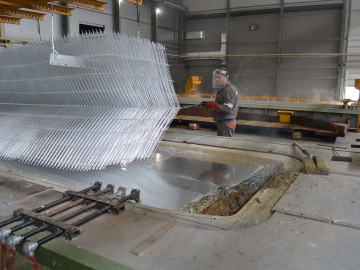
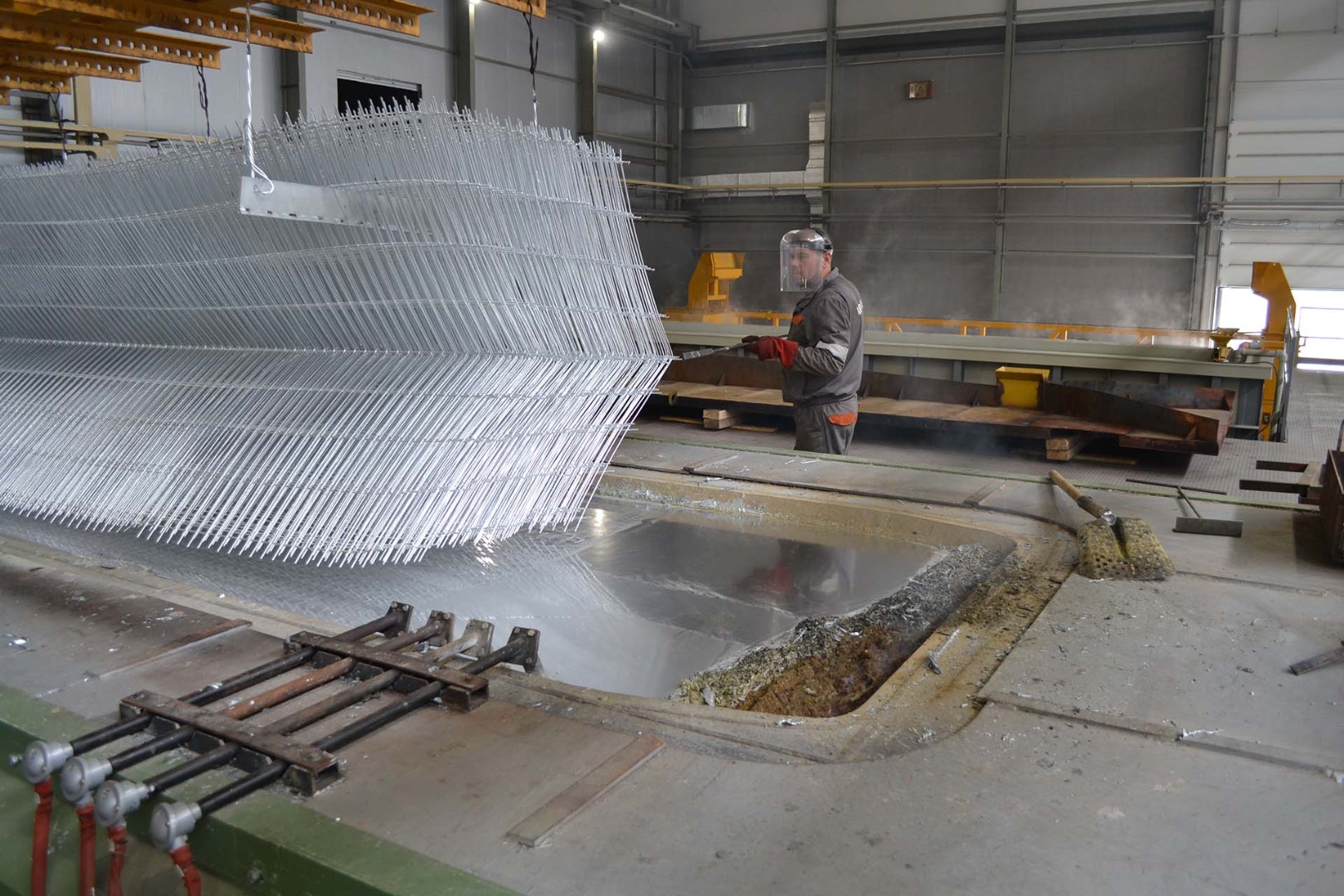
Hot galvanizing (immersing products in molten zinc at a temperature of 450–480 °C). This method is characterized by the highest protective properties among all other methods.
-
Electrolytic (electroplated) galvanizing involves applying a galvanic coating in acidic, sulfuric acid, or alkaline cyanide baths.
-
Thermodiffusion galvanizing or sherardizing (zinc saturation of steel products heated to 400–420 °C in a powdered zinc environment). During this process, the product is coated with zinc from vapor at high temperatures in a hydrogen protective atmosphere.
-
Cold galvanizing means the application of a special zinc-rich compound to a prepared surface using methods similar to those used for conventional polymer paints, resulting in a coating that possesses properties similar to those of hot-dip galvanized and polymer coatings.
Our production specializes in hot galvanizing of metal products. This method of iron and steel protection is the most reliable and financially feasible.
There are great advantages to the protection of steel and iron products with the help of zinc, such as:
-
high corrosion resistance (the index is close to the stainless steel durability);
-
self-recovery of the coating in the event of microdamage (the speed of zinc dispersal is about 2 mm per year at the outside temperature not higher than 70°С);
-
high efficiency of the equipment;
-
high thermal and electrical conductivity of the zinc coating.
Here is how the anti-corrosion coating process using the hot galvanizing method takes place at “Metalo Galva” LLC.
Technological process
In order to ensure the transportation of metal products during the hot galvanization, they have to be fixed on special traverses.
Before the hot galvanizing, the products undergo chemical treatment to prepare the surfaces that are to be galvanized.
Stages of the technological process:
-
Degreasing: before metal pickling (removal of oxides by chemical agents, which is essential for galvanization), it is necessary to remove oily and lubricating substances from the surface of metal products. Thus, the purpose of degreasing is to remove oily and/or lubricating substances from the surface using acidic solutions.
-
Pickling: this process is necessary to remove iron oxides from the surface of materials. An acid with a corrosion inhibitor is used for pickling, which is essential to stop the continued etching of the metal after the oxide has been removed.
-
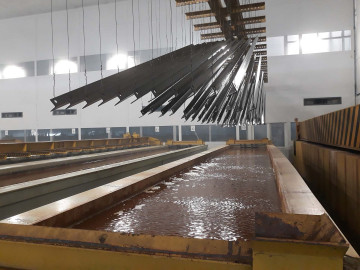
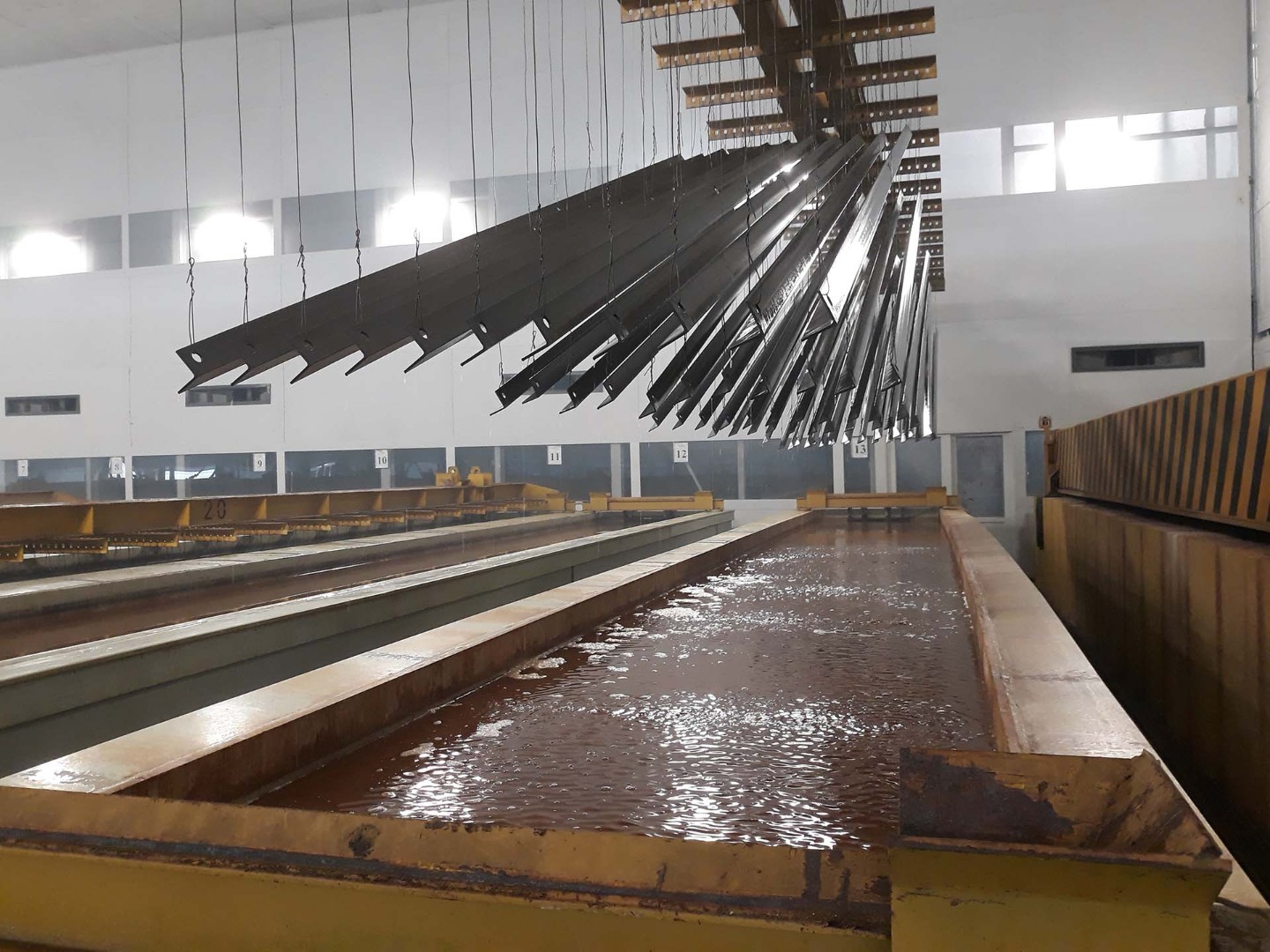
Rinsing: to completely remove the acidic solution after pickling, the products are rinsed in a water bath.
-
Fluxing: this process is carried out in a hot liquid solution of zinc/ammonium chloride to prepare the metal surface for proper "reaction" with molten zinc and to prevent oxide formation during the subsequent drying process.
-
Drying: the products are placed in a drying chamber where hot air circulates at a temperature of about 100°C. This allows the material to dry and preheat, reducing thermal shock from the high temperatures of hot-dip galvanizing.
-
Galvanizing: this process involves immersion in zinc with a pure zinc content of no less than 98.5%, at a temperature of approximately 450°C. In hot-dip galvanizing, additions of aluminum or other elements are allowed according to specific galvanizing requirements.
-
Cooling: the product is immersed in water..
-
Passivation: the passivation method helps protect metal structures from the aesthetic defect known as "white rust." This term refers to the formation of white or light gray layers consisting of zinc oxide and zinc hydroxide on the surface of galvanized products due to the oxidation of zinc in a humid environment.
This way, all the products manufactured using the ultra-modern equipment of our company go through all the stages of preparation, treatment, and galvanizing of metal structures at the highest European level and under all the current regulations and Euro standards.